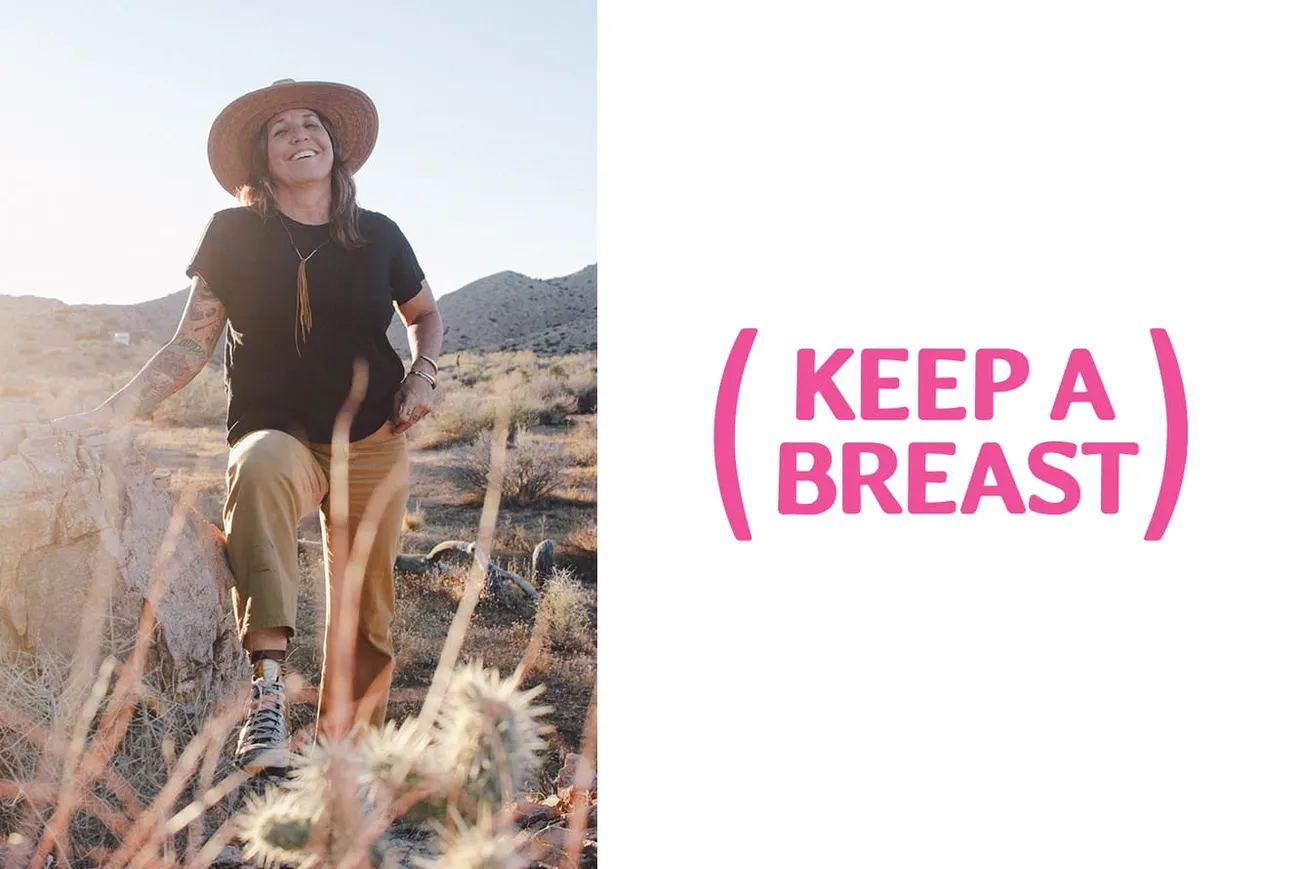
Shaney jo Darden has never done health advocacy the conventional way. Since founding Keep A Breast Foundation (KAB) 26 years ago, she has built a global breast health movement rooted in art, youth culture, and the kind of community energy that doesn't belong in a hospital brochure. From the iconic "i love boobies!" campaign to mobile-first wellness tools, KAB has always spoken the language of the generation it's trying to reach.
Now, that instinct has led her somewhere unexpected: the blockchain. Keep A Breast has become the sole beneficiary of Boobillions ($boob), a Solana-based memecoin community that has already directed over $82,000 toward real-world prevention, education, and wellness programs — including a building at "The Valley," a Southern California wellness retreat for breast cancer survivors and their families, named after the Boobillions community itself.
We sat down with Shaney jo to talk about what onchain philanthropy actually looks like in practice, why a punk-rooted nonprofit is a natural fit for crypto culture, and what this partnership might mean for the future of nonprofit fundraising.
Before we dive in — who is Shaney jo outside of the foundation? What does a regular day look like for you?
I've never been very good at separating my life from my work because Keep A Breast grew out of my own passions and community. Outside of the foundation, I'm an artist, creative thinker, and someone who loves being outdoors, hiking with my dog and hosting community gatherings. A typical day can involve anything from strategy meetings and fundraising calls to brainstorming creative campaigns or connecting with our community. No two days are ever the same, which is probably why I've been doing this for 26 years now.
Keep A Breast has been around for 26 years now. When you first started, what problem were you trying to solve that nobody else was?
When we started, most conversations around breast cancer felt clinical, scary, and aimed at older adults. We wanted to reach young people long before they became patients and give them information in a way that felt approachable and empowering. Art, music, action sports, and culture became our way in. We were trying to raise awareness while also inspiring prevention and proactive health habits.
Your "i love boobies!" campaign was bold, controversial, and incredibly internet-native — long before that was even a strategy. How did that campaign come to life, and what did it teach you about reaching younger audiences?
The campaign started with a simple idea: create something people would actually want to wear and talk about. We started by getting bands to wear "i love boobies!" tees onstage at Vans Warped Tour, and the energy in those crowds did the rest. Seeing your favorite band wear it while playing live, surrounded by thousands of other fans? It spread like wildfire through the all-ages community. The bracelets came after, once we knew the idea had legs.
What it taught us is that if you want to reach young people, you have to meet them where they are and speak their language without talking down to them. Authenticity always works better than fear-based messaging.
Keep A Breast grew out of skate, surf, and punk culture. How did those communities shape the foundation's identity, and why does that origin still matter today?
Those communities taught us the power of grassroots movements. They value creativity, independence, self-expression, and looking out for one another. That's always been part of our DNA ,as well as an against-the-grain, punk rock approach to advocacy. We’ve excelled at trailblazing, testing and trying new things to bring breast health conversations to unconventional spaces for 26 years. Even as platforms and technology evolve, the core idea remains the same: build genuine communities around shared values and invite people to participate, rather than simply consume.
KAB recently became the sole beneficiary of Boobillions ($boob), a memecoin on the Solana blockchain. For readers who aren't familiar with crypto — what is a memecoin, and how did this partnership even come across your radar?
It's probably interesting hearing a crypto explanation from someone who's still a bit of a newbie. I've spent the last 26 years building communities through art, culture, and health advocacy… not blockchain. Like a lot of normies, I came into this world curious but skeptical, and I was initially more interested in understanding the people and the purpose than the technology itself.
The simplest way I think about a memecoin is as an internet-native community that forms around a shared idea or cultural moment. Boobillions actually had a bit of a complicated start. It was originally set up by a crypto community that eventually moved on. But then someone who genuinely believed in what KAB stands for reached out to us and said: what if we did this right? That felt like our kind of story. Not the coin itself, but the idea that this community was still there, still enthusiastic, and looking for real purpose.
Over $82,000 has already flowed to KAB through Boobillions trading activity. Can you explain, in simple terms, how that actually works — how does trading a coin online translate into real money for your programs?
What's exciting is that community activity directly supports our work. As the community grows and participates, funds are generated that can be directed toward programs and initiatives at Keep A Breast. We focus less on the technical mechanics and more on the outcome: resources that help us educate, prevent, and support people affected by breast cancer.
A lot of people associate memecoins with scams or speculation. What made you confident enough to say yes to this partnership?
We've spent 26 years learning how to read people and communities, which is actually most of what building KAB has been. So when this came across our radar, we didn't evaluate it like a financial decision. We evaluated it the way we'd evaluate any partnership: do these people show up with integrity? Are they willing to put action behind their words before they get anything in return? The answer was yes. The skepticism around memecoins has plenty of reasons for it. But we didn't say yes to a category. We said yes to a specific group of people who demonstrated their values before we ever agreed to anything. That's always been our bar, whether it's a brand, a band, or a blockchain.
We didn't say yes because it was a memecoin. We said yes because of the people involved and the values they demonstrated. We took the time to get to know the community, understand their intentions, and see whether there was genuine alignment with our mission. Ultimately, we saw a group of people who wanted to create positive impact and were willing to put action behind their words.
Part of those funds are now going toward "The KAB Valley" — a wellness retreat for survivors, patients, and families in Southern California. Tell us about that project and what it means to have a building named after an online crypto community.
The KAB Valley is one of the most meaningful projects we've ever worked on. It's being designed as a place for healing, connection, and support for survivors, patients, and their loved ones. Having a building named after with the Boobillions community is a powerful reminder that people who may have met online can come together to create something tangible that helps others in the real world.
Traditional nonprofit fundraising relies on campaigns, galas, and grant cycles. If onchain giving works the way you hope, what does that change about how nonprofits think about funding?
I don't think it replaces traditional fundraising, but it definitely opens up new possibilities. Communities today gather in very different ways than they did twenty years ago. If technology can help connect passionate supporters directly to causes they care about, that's worth exploring. For nonprofits, it's about staying curious and being open to new ways of engaging people in meaningful action.
10. You've described yourself as a "creative activist." How do you keep the creative side of KAB alive while also managing the operational and financial realities of running a global nonprofit?
Creativity has always been our greatest asset. It's what allows us to connect with people, solve problems, and stay relevant across generations. Of course, running a nonprofit requires discipline, financial responsibility, and strategic thinking, among other things, but I've learned that creativity and structure aren't opposites. The best ideas happen when those two things work together.
What would you say to other nonprofit founders who are curious about Web3 or crypto fundraising but don't know where to start?
Start with community, not technology! It's easy to get distracted by trends and jargon, but at the end of the day it's about people. Understand who you're serving, find communities that genuinely align with your mission, and approach new opportunities with curiosity and due diligence. Relationships still matter more than any technology.
As KAB celebrates 26 years of impact, what's the version of this foundation you're building toward — what does the next chapter look like?
We're focused on continuing to meet people where they are while staying true to our mission. That means expanding access to education, prevention tools, wellness resources, and spaces like The KAB Valley. The next chapter will be more about deepening our impact and finding new ways to support people before breast cancer impacts their lives with early detection resources. We’re not about becoming bigger for the sake of it.
Last one - what's something most people don't know about you that you wish they did?
People often see the public side of the work, but what motivates me most is connection. I've always been fascinated by how communities form and how creativity can bring people together around a shared purpose. Whether it's through art, culture, health advocacy, or now even crypto communities, I've spent most of my life building spaces where people feel seen, supported, encouraged, empowered, and inspired to take action.