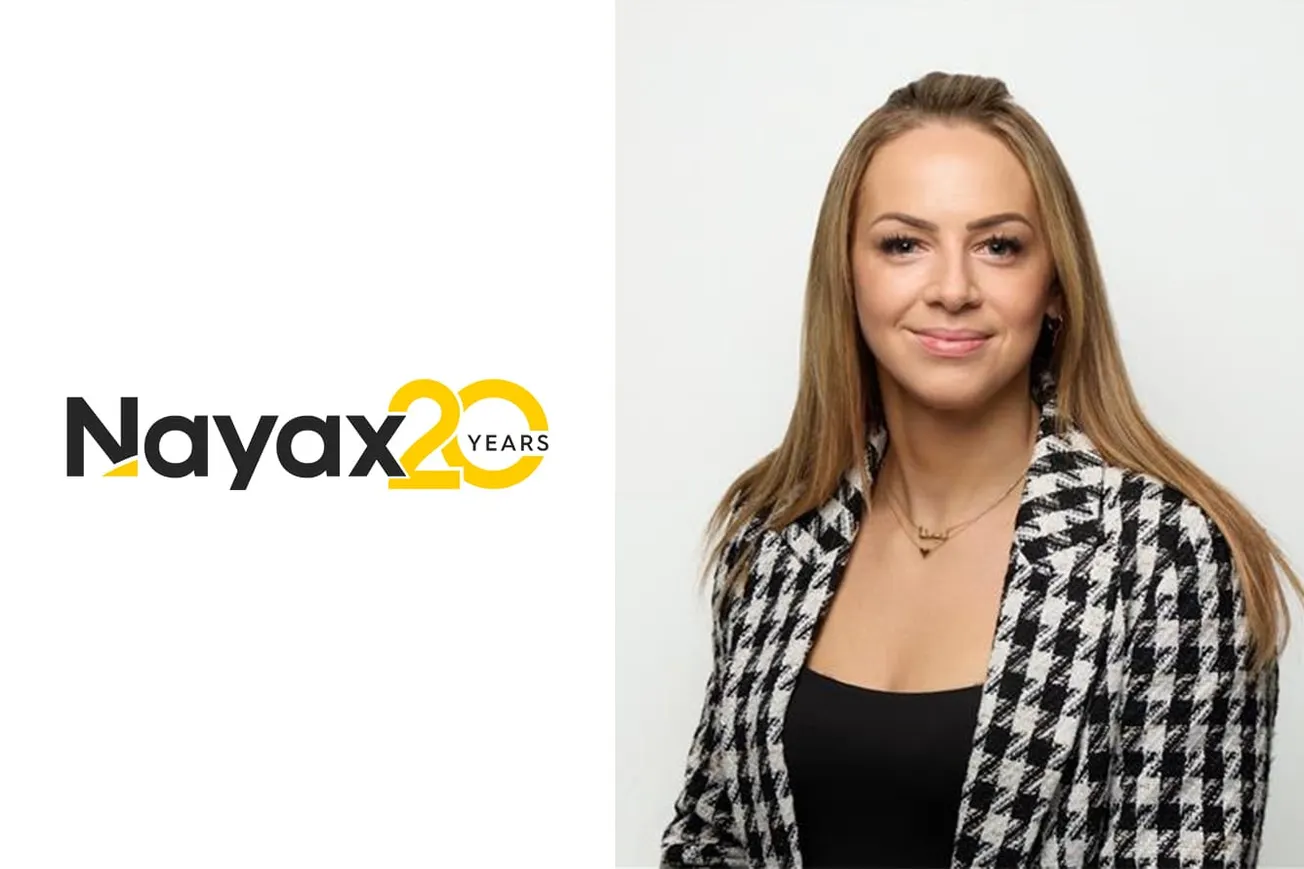


Every time you tap your card, click "pay now," or send money across borders, a remarkably complex chain of technology springs into action behind the scenes. For decades, that technology has been held together by ageing infrastructure — legacy systems that were never designed for the speed, scale, or data demands of modern commerce. Most companies have simply learned to work around it. Robert Kraal decided to rebuild it.
With nearly 30 years of experience in online payments, Robert is one of the most seasoned figures in the global payments industry. His journey started at Bibit, the world's first global Payment Service Provider, which was later acquired by RBS/Worldpay. From there he moved through Google Netherlands before joining Adyen in 2010 as COO, where he helped build and scale one of the most respected payment platforms in the world.
Now, as Co-founder of Silverflow, Robert is taking on one of the industry's most persistent challenges: the complexity and cost buried inside traditional payment processing. Silverflow's cloud-native platform offers a single API connection to card networks — stripping away layers of unnecessary infrastructure, reducing cost, and unlocking richer data for the businesses that depend on it.
We sat down with Robert to talk about why the payments industry is long overdue for a rebuild, what technologies like agentic AI and tokenisation mean for the future of commerce, and what nearly three decades in the industry has taught him about what actually matters.
Robert, let's start with something a little unexpected — you studied Geophysics before ending up in payments. How does someone go from mapping the earth to processing payments, and what do you think that background gave you that a traditional finance career might not have?
It’s certainly an unusual route into the payments world. I completed my Master’s degree in Geophysics at Utrecht University, specialising in exploration geophysics and seismology. While it seems miles away from transactions, the core discipline is all about mapping what is happening beneath the surface, analysing highly complex systems, and interpreting massive datasets.
That exact analytical mindset is surprisingly transferable to global payments. The payments ecosystem is a web of moving parts that must operate flawlessly at scale. Moving from mapping physical layers of the earth to mapping transactional data flows felt quite natural.
A traditional finance background often teaches you to look at numbers through a strictly commercial or regulatory lens. Geophysics trained me to look at underlying structural architecture and find patterns within complex environments. It gave me a structural engineering perspective on financial data, which has been incredibly useful for rebuilding infrastructure from the ground up rather than just managing the status quo.
You were at Bibit, one of the world's first global Payment Service Providers, very early on. What was the payments landscape like back then, and what made you realize this was an industry worth dedicating your career to?
I joined the Bibit team back in 1999 as part of the first six employees and it was a wild time. eCommerce was just emerging as a concept. The internet was completely transforming how businesses operated, and we quickly realised that payments were going to be the absolute heart of making that global digital transformation possible.
Back then, the landscape was completely unmapped territory. Every single day brought a different challenge. It was hands-on, fast-paced and brilliant fun.
The turning point for me was seeing how mission-critical this infrastructure really was. If payments don’t work, digital business completely grinds to a halt. I realised that payments sit at a fascinating, highly dynamic intersection of technology, global commerce, regulation and consumer behaviour. There is always a new problem to solve and that constant evolution is exactly why I stayed in the sector.
You later joined Adyen as COO in 2010 and helped build its global acquiring and processing service. What did that experience teach you about what great payment infrastructure actually looks like — and where the industry was still falling short?
Joining Adyen in 2010 as COO was a defining moment for me. The company was in its early stages but possessed a bold vision to build a single, unified global payments platform rather than relying on the heavily fragmented systems that dominated the market. My focus became creating and executing our global acquiring and processing proposition, which included securing our own licenses and BIN sponsorships across five continents.
That experience taught me that great payment infrastructure must be built from the ground up with modern technology and a clear, unified vision. It proved that you can unlock massive value for merchants by eliminating disjointed setups and offering clean, developer-friendly APIs.
However, it also exposed where the industry was still falling short. While consumer-facing frontends were getting prettier, the deep backend processing infrastructure was still trapped in the past. It remained heavily reliant on brittle mainframes and decades-old legacy code. We had streamlined the merchant experience, but the actual pipework connecting to the card networks remained fundamentally unchanged, slow and data-poor.
For someone unfamiliar with the technical side — what is payment processing, and why is the way it's currently built a problem for modern businesses?
In simple terms, payment processing is the invisible technological chain that starts the moment you click pay, verifying your details and moving money from your bank account to the merchant. It sounds straightforward, but behind the scenes, it requires a massive amount of communication between the merchant, the payment provider, the card networks and the banks.
The core issue is that much of the backend infrastructure running global commerce was built 30 to 40 years ago on legacy mainframes and old code. It was designed for an era of physical paper imprints, not real-time digital commerce.
Because of this outdated foundation, modern businesses face a massive tech drag. Legacy systems rely on slow batch processing, require armies of developers to maintain, and are prone to expensive outages. Worst of all, they flatten and discard transaction data. Merchants receive a simple yes or no answer instead of the rich, transaction-level data they need to optimise their costs, track fees accurately and prevent fraud.
Silverflow is described as "cloud-native." In plain terms, what does that mean — and why does it make such a difference compared to how most payment processing systems are built today?
For us, cloud-native is not just a trendy buzzword, it’s our operational standard. Traditional payment processing systems are tethered to physical, on-premise legacy hardware. These systems are rigid, require constant manual patching and struggle to scale efficiently when transaction volumes surge.
Being cloud-native means our entire platform was born and built entirely in the cloud, utilising modern software architecture designed for 24/7 real-time operations. It is highly scalable, inherently secure and agile enough to roll out updates instantly without disrupting service.
The practical difference for businesses is massive. Instead of dealing with brittle systems that restrict innovation, our platform is incredibly data-rich and simple to use. It allows fintechs, banks and merchants to access complete transaction insights instantly. Essentially, we have thrown off the shackles of decades-old technology debt, replacing it with a flexible architecture that can adapt to any modern commerce demand without requiring a small army of developers to keep the lights on.
Silverflow offers a single API connection to card networks. Can you walk us through what that actually means in practice — and why reducing that complexity matters so much to the fintechs, acquirers, and merchants you work with?
In practice, a single API connection means we have consolidated a massive maze of tangled technology into one clean, modern gateway directly to major card networks like Visa, Mastercard and American Express. Historically, if an acquirer or large merchant wanted to expand globally, they had to build and maintain separate, highly complex integrations for different networks and regions.
Reducing that architectural complexity changes everything for our clients. Instead of wasting years of development time and millions in capital setting up disjointed infrastructure, they plug into Silverflow once.
Out of the box, they get real-time transaction data, automatic scheme updates, network tokenisation and direct-to-card payouts. It dramatically lowers operational costs, eliminates data fragmentation and accelerates time-to-market. We’ve had clients go live in less than five weeks, which is unheard of in traditional processing. By handling the heavy backend lifting, we free our community to focus on creating new products and scaling their businesses.
You work closely with card schemes, acquirers, PSPs, and regulators. That's a lot of different stakeholders with different priorities. How do you navigate those relationships — and where do you see the most tension in the ecosystem right now?
Navigating this many stakeholders requires a mix of deep curiosity, adaptability and a focus on relationship-building. Because payments operate through such an interconnected network, you have to speak everyone's language, whether you are talking compliance with a regulator or routing logic with a technologist.
We handle this by being collaborative and approachable. We do the heavy lifting on compliance and scheme rules so our partners do not have to stress over them.
Right now, the greatest tension in the ecosystem sits between legacy rigidity and the rapid demand for data-led innovation. Card schemes introduce hundreds of compliance updates and new rules every year, which places an immense burden on traditional acquirers and processors running older tech stacks. There is also a growing push from merchants who want total transparency over scheme fees and transaction costs, while many traditional legacy setups simply cannot surface that data accurately. We bridge that gap by acting as the modern translator between network rules and real-time business intelligence.
Tokenisation is one of those words that gets thrown around a lot in payments. Can you explain what it actually means, why it matters for security and fraud prevention, and where you think it's heading?
Tokenisation replaces a sensitive 16-digit card number with a secure, randomised string of characters called a network token. This token is completely meaningless to a fraudster if intercepted, because only the card network can decrypt it.
While it began as a security story, it has rapidly evolved into a major data play. Network tokens automatically refresh when a physical card expires or is replaced. For subscription businesses, this keeps acceptance rates high and dramatically reduces customer churn.
Where it is heading next is incredibly exciting, particularly regarding agentic commerce, where AI agents make purchases on behalf of humans. The card networks have launched dedicated frameworks like Visa Intelligent Commerce and Mastercard Agent Pay, which are built entirely on agent-specific network tokens. These tokens carry rich, contextual data, including device binding, user spending limits, and cryptographic proofs. Tokenisation is no longer just about hiding numbers, it is becoming the rich data foundation required to secure automated, AI-driven commerce.
Cross-border payments are still surprisingly slow and expensive for something that happens billions of times a day. What's actually causing that friction — and is the industry close to solving it?
The friction in cross-border payments comes down to structural fragmentation. When money moves across borders via legacy infrastructure, it often has to pass through multiple intermediary banks, local clearing systems, and separate regional processors. Each step adds a layer of operational cost, delays settlement, and degrades transaction data. Many companies attempt to bypass this by building complex, multi-year infrastructure expansions in every new market they enter, which is incredibly inefficient.
Are we close to solving it? The industry is making strides, but the solution will not come from patching the old plumbing. It requires a fundamental shift to modular, cloud-native architecture. We approach cross-border expansion through modern acquiring partnerships and cross-border BIN sponsorships. By using a single API that communicates directly with global card networks, businesses can enter new global regions seamlessly. We can bypass traditional regional bottlenecks, giving merchants a low-friction route to international growth without the multi-year infrastructure headaches.
Let's talk about agentic AI — the idea of AI that can take actions on your behalf, including making payments. How does that change the way payment systems need to be designed, and is the current infrastructure ready for it?
Agentic AI changes the game entirely. When an AI agent autonomously books travel, orders groceries, or rebalances treasury funds, the payment ecosystem can no longer rely on human checkpoints like manual card entries or standard multi-factor authentication.
The transaction requires an entirely new layer of context. The payment system needs to know who authorised the agent, under what specific spend parameters, and on what device.
The reality is that legacy infrastructure is completely unequipped for this. Traditional systems flatten and discard complex transaction data just to post a simple ledger entry. If you feed an AI agent thin data, it cannot function safely. Payment networks know this, which is why new frameworks are being built exclusively on data-rich network tokens. To support agentic AI, infrastructure must be cloud-native and natively capable of passing complete, unfragmented transaction messages in real time. That is exactly what we have built at Silverflow, ensuring the pipework matches the intelligence of the software.
Digital currencies — whether central bank digital currencies or stablecoins — keep coming up in conversations about the future of payments. Do you think they will meaningfully change how payments work, or is the reality more complicated than the headlines suggest?
The reality is definitely more nuanced than the headlines imply. There is no denying that stablecoins and digital currencies offer fascinating potential for driving transaction efficiencies and speeding up settlement times. However, introducing a new asset class does not automatically solve the underlying structural issues of global finance.
Our perspective is that while the industry explores these new digital assets, the primary revolution is actually happening at the foundational infrastructure level.
A currency, whether traditional fiat, a stablecoin, or a central bank digital currency, is only as effective as the rails it runs on. If you attempt to process next-generation digital currencies through twenty-year-old, rigid backend systems, you will quickly hit the same old walls regarding data fragmentation and operational friction. That’s why our focus remains entirely on building the smartest, fastest, cloud-native rails possible. We want to ensure that as value transfer continues to evolve, the underlying infrastructure can support real-time demands securely and seamlessly.
Legacy systems are one of the biggest blockers to innovation in banking and payments. Why is it so hard for established players to move away from them — and what does it cost the industry to keep patching the old infrastructure instead of replacing it?
It’s hard to move away because these mainframes handle trillions of dollars, and changing them feels like trying to replace the engines of a commercial airplane mid-flight. Established players have spent decades building layer upon layer of custom software on top of these core systems, creating a tangled web of dependencies that no single team fully understands anymore.
But keeping this technology debt on life support comes at a staggering cost. It leads to operational outages and severely stifles innovation, with a vast majority of banks actively struggling to deploy new payment solutions because of their legacy drag.
By continuously patching old infrastructure instead of replacing it, financial institutions miss out on critical revenue and open themselves up to immense competitive risks. It forces them to operate blindly without rich data insight, turning payments into an expensive back-office cost centre rather than a source of strategic value. It is simply unsustainable for the real-time demands of modern global commerce.
Neobanks and challenger banks have shaken up retail banking over the past decade. From a payments processing perspective, what have they done well — and where are the gaps that still need to be filled?
Neobanks have done a phenomenal job of proving what is possible when you build on modern, API-driven architecture. They completely reimagined the user experience, making onboarding near-instantaneous and offering clean, real-time notifications that traditional banks took years to match. They have really led the charge in showing how to leverage agile technology to lower costs and delight consumers.
However, looking at the backend processing side, there are still gaps to fill. Many challengers initially focused heavily on the consumer-facing frontend or issuing side of the business. As they mature, the real opportunity lies in the convergence of issuing and acquiring. To unlock their next phase of growth, neobanks need deeper visibility into transaction data and more robust network connections to optimise merchant flows. They must move beyond just being agile apps and ensure their underlying backend processing infrastructure has the technical depth to handle complex cross-border flows and advanced fraud prevention seamlessly at scale.
You've spent nearly 30 years watching this industry evolve. What is the change happening right now that excites you most — and what keeps you up at night?
What excites me most right now is that we are experiencing a genuine maturation of the industry where payments have shifted from back-office plumbing to a core strategic asset. Merchants, banks and fintechs are realising that small optimisations in data transparency and authorisation rates can save them millions. We are seeing a powerful convergence where traditional institutional stability is teaming up with modern, cloud-native tech precision and being at the forefront of setting that new global standard is incredibly rewarding.
As for what keeps me up at night, it is the sheer speed at which sophisticated cyber-threats and fraud are industrialising globally. Fraudsters are deploying automated, AI-driven tools at machine speed, yet far too many financial institutions are still relying on slow, manual processes or rigid, rules-based legacy systems to protect themselves. If the industry does not accelerate its transition to modern, data-rich infrastructure, the gap between criminal sophistication and defensive capability will become a major risk surface.
Last one — and we ask this to everyone we interview. What's something about you or your journey that most people in the payments world would be surprised to find out?
People in the industry know me as a payments executive who loves diving deep into technical data architecture, processing rules and global compliance frameworks. Because of that, they might assume I have a ruthlessly corporate, 24/7 grind mindset.
They would be genuinely surprised by how much emphasis we place on keeping things balanced, casual and fun at Silverflow. We’re a team of self-proclaimed payments nerds, but we make sure we don't take ourselves too seriously. We have lunch together every single day and the conversation is just as likely to be about upcoming music festivals, board game nights or padel tennis tournaments as it is about coding or card scheme regulations. High performance shouldn't require a high-stress, unsustainable corporate grind. Building the world's most trusted payments processor is an intellectual challenge, but you can absolutely crack the case while enjoying a laugh and a beer with your team.
About the author
Robert Kraal, Co-founder, Business Development, Silverflow.
Robert Kraal is one of the few people in the world with over 25 years of experience in online payments.
After completing his degree in Geophysics, he started his career at Bibit, the first global Payment Service Provider (PSP) which was acquired by RBS/Worldpay. At RBS/Worldpay he went on to lead account management, before moving on to Google Netherlands. He joined Adyen in 2010 in the role of COO, where he was responsible for building and running the global acquiring and processing service.
As Co-founder and Business Development of Silverflow, Robert is responsible for maintaining relationships with the card schemes, acquirers, PSPs and regulators.
About Silverflow
Silverflow is a new kind of payment processing platform designed for today's payment needs and fit for the future. A cloud-native solution with a single API to the card networks. One platform with one connection. Reducing cost and complexity, easy to use, data-rich, Silverflow frees you to innovate.
For more information contact Silverflow: https://www.silverflow.com/